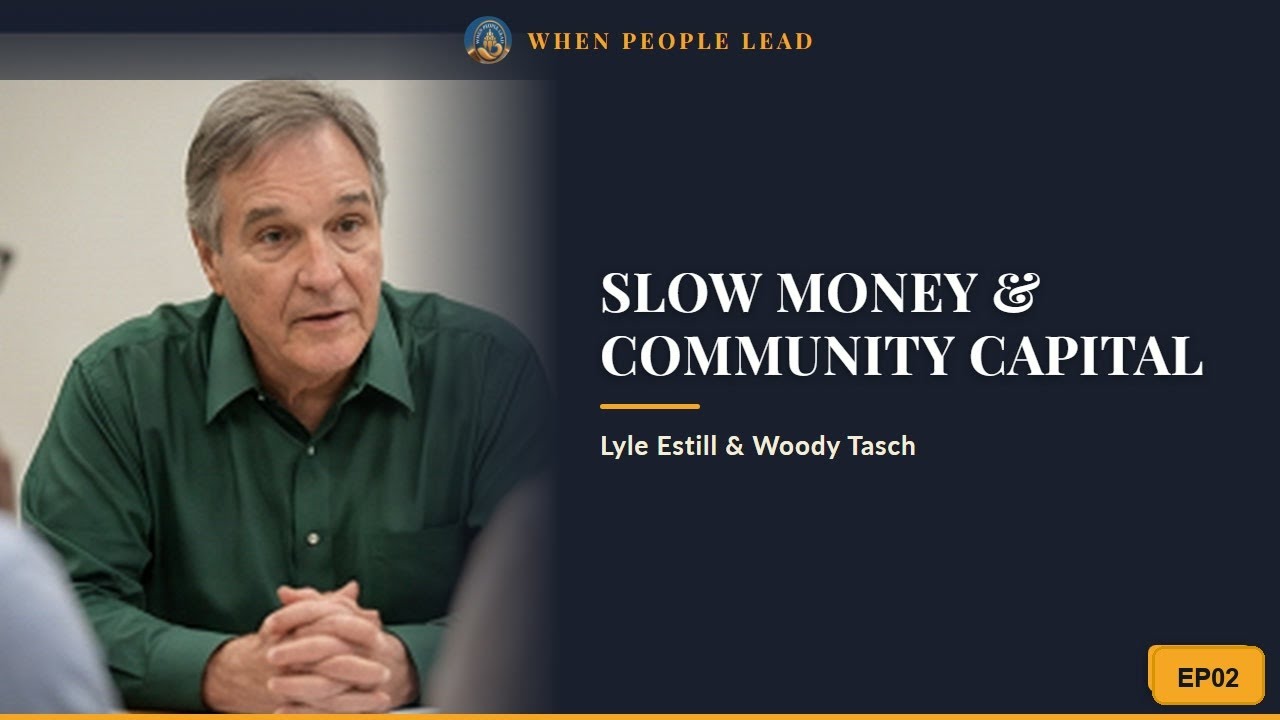
Slow Money is not only about food. It is a leadership model for putting capital back into relationship with the places it affects.
Most communities talk about resilience as if it is a mood. They want stronger local farms, healthier food, trusted producers, better access, and fewer fragile supply chains. Then money leaves the room. Capital flows somewhere distant, abstract, and difficult to question.
The Slow Money conversation on When People Lead is useful because it brings the subject back down to earth. The leadership question is not simply whether capital can earn a return. It is whether money can remember the community it came from and help repair the systems people rely on every day.
Local Food Systems Need More Than Enthusiasm
Farmers, food producers, distributors, markets, kitchens, and local food projects often operate with thin margins and heavy expectations. Communities may love the idea of local food, but affection does not automatically pay for cold storage, equipment, land access, working capital, staff, or distribution.
That gap creates a leadership test. If a community says it values local food, where does that value show up in budgets, investments, policies, purchasing, and shared risk? Slow Money pushes leaders to make the invisible financial system visible again.
This does not require every resident to become an investor. It does require leaders to create understandable ways for people to participate. A community cannot fund what it cannot see.
Patient Capital Changes The Conversation
Traditional capital often asks local food enterprises to grow faster, standardize sooner, and prove returns in a timeframe that may not fit the work. Patient community capital asks a different set of questions. What would help this producer become more stable? What infrastructure would reduce waste? What investment would keep value circulating locally?
This is not sentimental finance. It is disciplined proximity. People who live near the consequences of a system often understand risks and benefits differently from people evaluating a spreadsheet from far away.
For leaders, the practical move is to convene finance, producers, civic institutions, and residents around specific opportunities. The narrower the ask, the easier it becomes for people to act.
Trust Is Infrastructure
Local investing only works when trust is real enough to carry hard conversations. People need to know who is making decisions, how money will be used, what risk exists, and how success will be defined. Vague community language is not enough.
The strongest leaders do not ask people to trust a slogan. They create transparent structures: clear terms, visible projects, accountable stewards, honest reporting, and stories that show what changed because the community participated.
That kind of trust becomes infrastructure. It lowers the cost of the next collaboration and makes future resilience easier to fund.
What To Take Back To Your Team
- Name the local food assets your community already depends on.
- Turn broad support into specific funding opportunities.
- Use patient capital where conventional timelines would weaken the work.
- Report outcomes in human, operational, and financial terms.
Keep The Conversation Moving
A resilient food system is not built by admiration alone. It is built when people connect money, trust, and responsibility to the places they call home. Slow Money gives leaders a practical way to start that conversation.