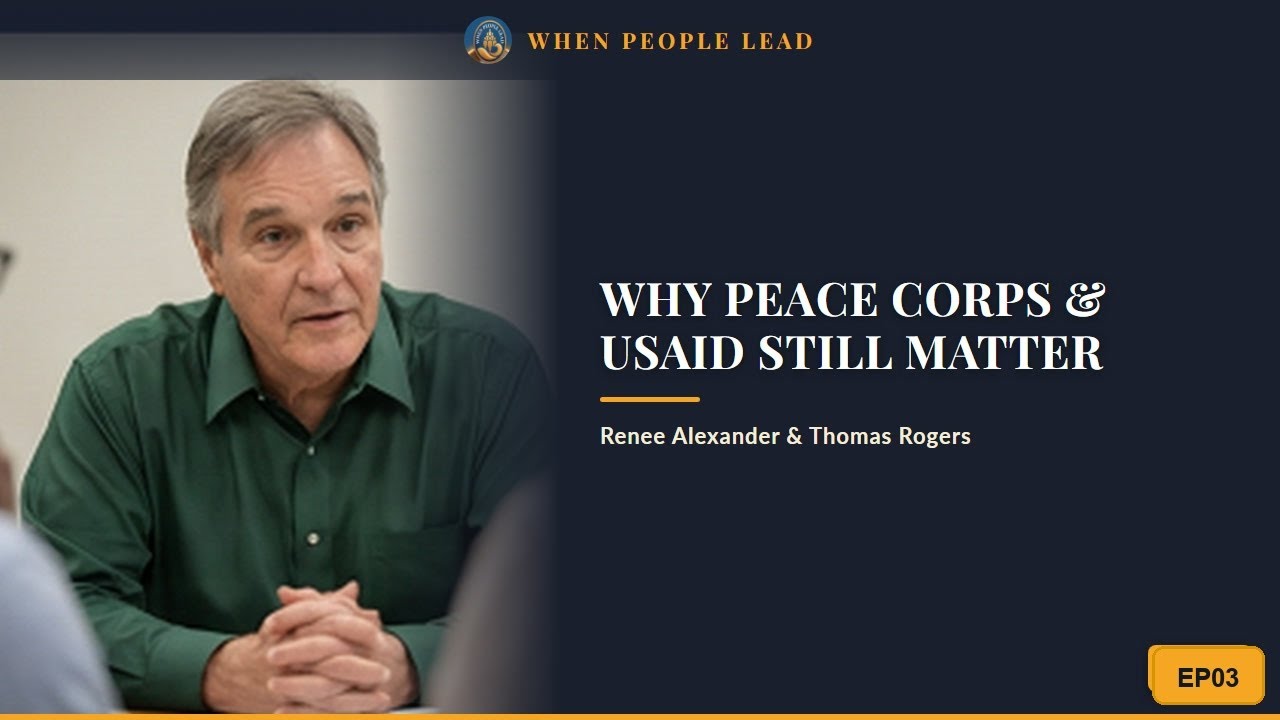
Service abroad reveals a leadership discipline that applies anywhere: influence begins when people believe you are there to understand before you act.
Soft power is easy to praise and hard to practice. In public language it can sound like strategy, diplomacy, or national reputation. In lived service, it usually begins much smaller: a person entering a community with limited authority, imperfect understanding, and a choice about whether to listen first.
The When People Lead conversation around service abroad is a reminder that trust is not a communications asset. It is earned behavior. Leaders who serve across cultures learn quickly that formal credentials do not automatically create credibility.
Arrival Is Not Leadership
A common mistake in service work is confusing arrival with contribution. A program begins, a team lands, funding is announced, and everyone is tempted to start solving. But communities are not blank pages. They have memory, leadership, conflict, pride, fatigue, and local knowledge that outsiders can miss if they move too quickly.
Good service leaders slow the first phase down. They ask who already holds trust, what has been tried before, what language people use for the problem, and what people fear losing if an outside plan changes the system.
This is not passivity. It is responsible preparation. The faster a leader wants to move, the more carefully they need to understand the ground.
Trust Is Built In Ordinary Exchanges
Trust rarely arrives through one impressive moment. It is built through consistency: showing up on time, keeping small promises, admitting what you do not know, learning names, respecting local customs, and staying present when the work becomes inconvenient.
Those ordinary exchanges matter because they reveal motive. People can tell the difference between a leader who wants a project completed and a leader who is willing to be accountable to the people affected by the project.
This is the heart of soft power as a leadership practice. Influence grows when people experience you as reliable before they experience you as persuasive.
Local Knowledge Should Change The Plan
Listening is only credible if it has consequences. If a leader listens politely and then proceeds exactly as planned, the community learns that consultation was performance. Real listening changes timelines, priorities, language, staffing, and measures of success.
Cross-cultural work makes this obvious, but the principle applies to any organization. A central office, executive team, funder, or outside consultant can easily miss what frontline people already know.
Leaders who want durable outcomes need plans that are strong enough to guide action and humble enough to be corrected by reality.
What To Take Back To Your Team
- Treat the first phase of service as learning, not delay.
- Ask who already has trust before assigning authority.
- Let local knowledge change the operating plan.
- Build credibility through promises small enough to keep consistently.
Keep The Conversation Moving
Soft power starts with trust because people do not follow the idea of service. They respond to the experience of being respected. That is true abroad, and it is true in every room where leaders ask others to believe the work is worth doing.