What Community Energy Taught Me About Leading Under Pressure
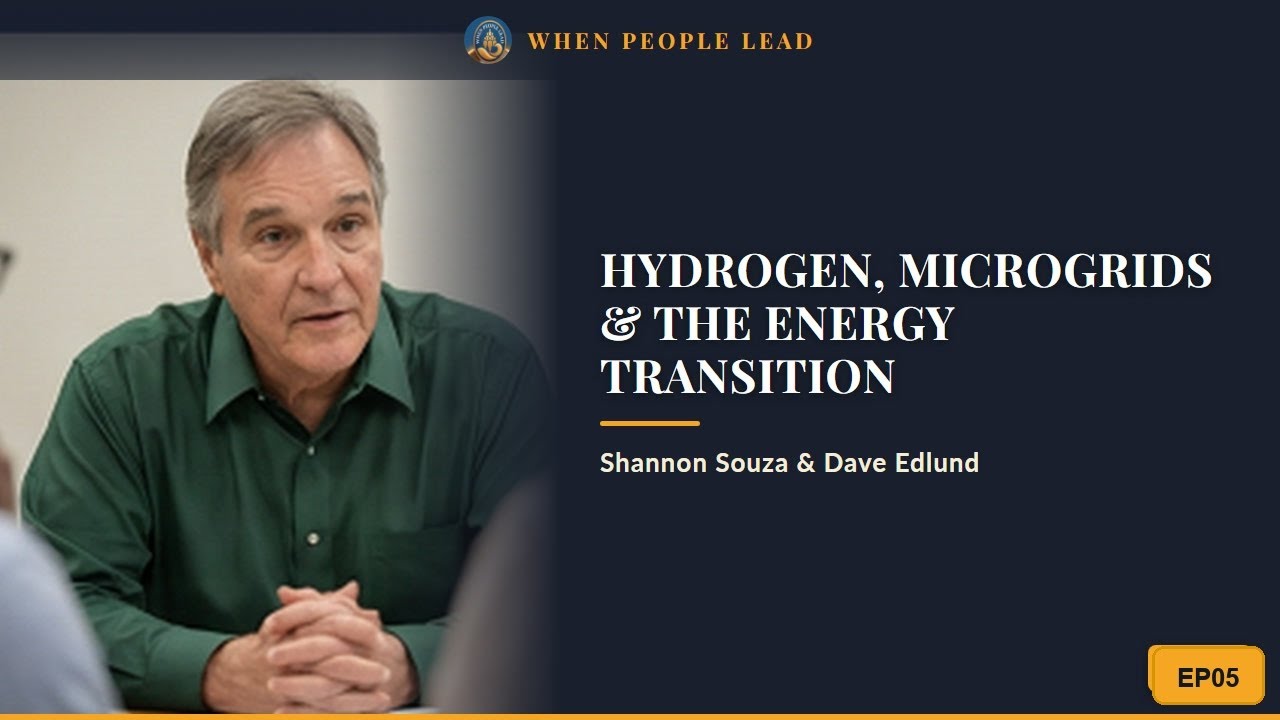
When Shannon Souza and Dave Edlund talk about hydrogen, they do not start with the technology. They start with the community that needs the power.
That order matters more than it sounds. Most conversations about the energy transition run the other way round. Someone explains the equipment, the chemistry and the funding model, and the people who have to live with the result appear at the end as an afterthought. Reverse it, and the questions change.
What the conversation covered
Shannon and Dave work on hydrogen, microgrids and distributed generation in the Pacific Northwest. Between them they cover the engineering and the deployment reality, which is a rarer pairing than it should be.
A few things stayed with me.
Electrolysis alone does not get you there. The popular version of the hydrogen story is that you make it with surplus renewable power and everything follows. Dave was direct about why that is incomplete, and about where methanol-to-hydrogen systems and on-demand generation fit instead.
Microgrids are a resilience decision before they are an energy decision. A community that can keep its own lights on through a failure elsewhere has bought something other than cheaper electricity. That reframing changes who in a town should be at the table.
Capital certainty is the constraint, not enthusiasm. Shannon was clear that the projects which stall rarely stall on the science. They stall because the money cannot see a predictable path through policy and permitting.
The leadership point underneath it
What made this a When People Lead conversation rather than an energy podcast episode is what both of them do when the pressure comes on. They keep the community in the frame. They accept that a slower project which a town understands and supports will outlast a faster one imposed on it.
That is a pattern I keep meeting across every field this show visits. Food banking, the Peace Corps, climate science, community energy. Different work, same discipline. The leaders who last are the ones who treat the people affected as participants rather than recipients.
Take this into your own week
One question worth borrowing from this episode, whatever sector you work in.
On the decision in front of you right now, who is affected but not in the room? Name one, and find out what they would say before you commit.
That is the whole practice. It is not complicated and it is not comfortable.
You can watch or listen to the full conversation with Shannon Souza and Dave Edlund on the episode page. If these notes are useful, join Field Notes and they will come to you each week.
